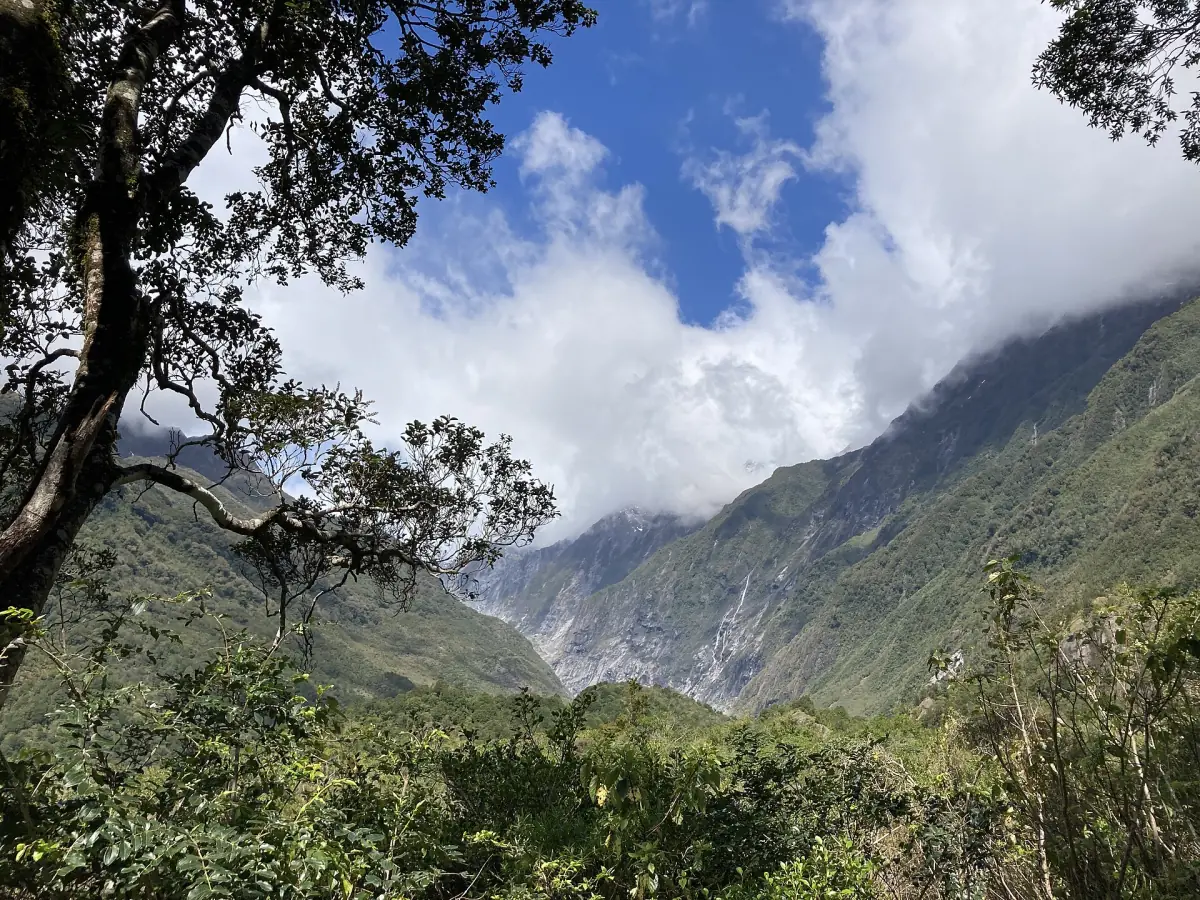
Franz Josef weather in short
Rain is part of a visit to the West Coast. NIWA's long-term averages for Franz Josef (1981 to 2010) give 5,751 mm of rain in a year, and every month brings several hundred millimetres. There is no dry month to wait for. The better question is how to keep your plans flexible.
Two limits apply to the figures on this page. The rainfall table is for Franz Josef itself but comes from the 1981 to 2010 period, so it describes a long-term pattern and not a forecast for this year. Temperature figures are only available here for Hokitika, a coastal town about 135 km north by road, and they are not Franz Josef temperatures. Higher up on the ice it is colder than at either place.
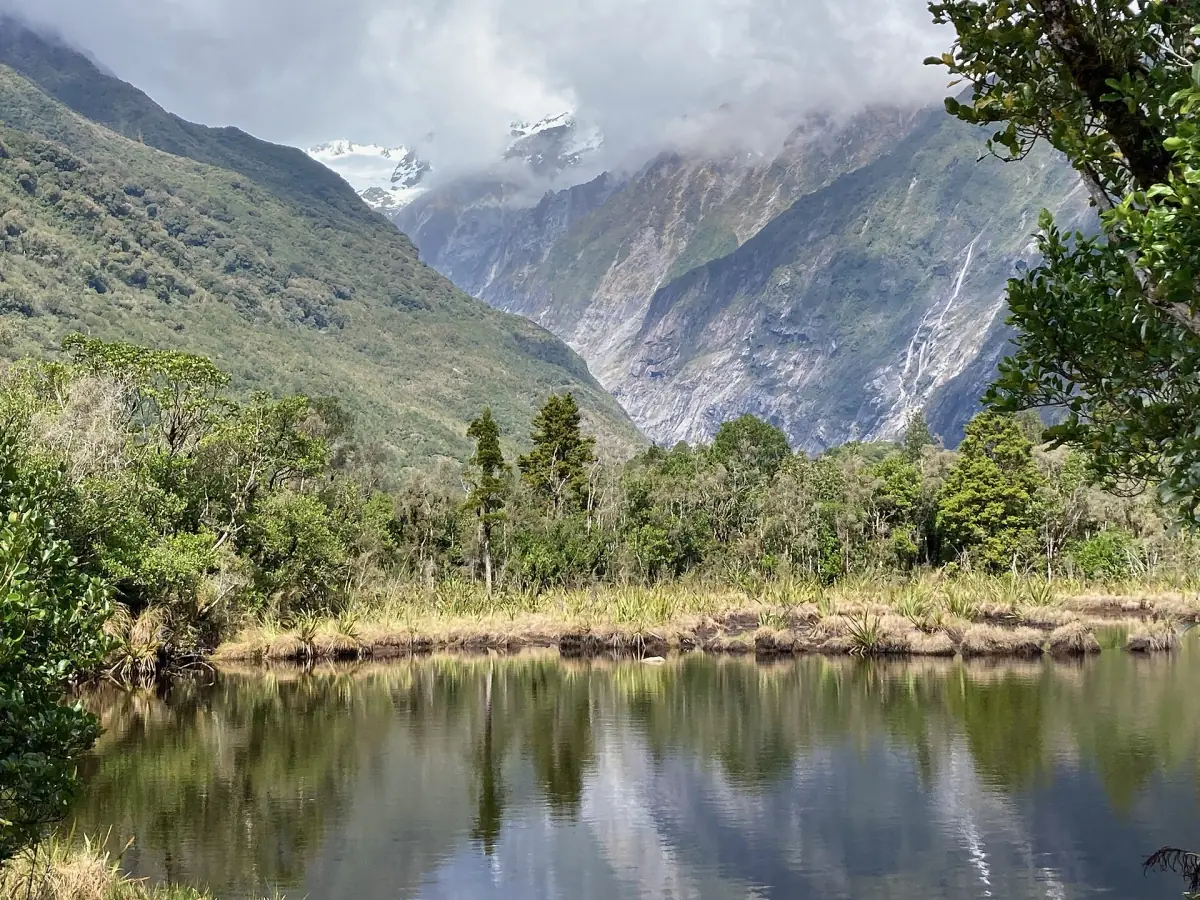
Rainfall by month at Franz Josef
Monthly averages from NIWA's 1981 to 2010 normals, in millimetres.
| Month | Rain (mm) | Month | Rain (mm) |
|---|---|---|---|
| January | 567 | July | 352 |
| February | 387 | August | 422 |
| March | 473 | September | 505 |
| April | 407 | October | 595 |
| May | 446 | November | 487 |
| June | 451 | December | 659 |
The printed annual figure is 5,751 mm. Rounded monthly values can add up to a slightly different sum, but the printed total is the official one. February and July are the lowest, but even those average more than 350 mm. Do not read a lower month as a promise of dry days.
Tours that run in Franz Josef weather
Flights, heli hikes and guided walks around Franz Josef and Fox Glacier, with live prices, availability and cancellation rules.
Temperatures: Hokitika as a guide to the coast
Averages for 1991 to 2020 at Hokitika, a coastal town to the north.
| Month | Average high (°C) | Average low (°C) | Rain (mm) |
|---|---|---|---|
| January | 19.5 | 12.0 | 257.4 |
| February | 19.9 | 12.1 | 191.7 |
| March | 18.8 | 10.6 | 213.4 |
| April | 16.6 | 8.6 | 244.9 |
| May | 14.6 | 6.5 | 252.8 |
| June | 12.5 | 4.2 | 261.2 |
| July | 12.0 | 3.1 | 228.0 |
| August | 12.6 | 4.2 | 246.9 |
| September | 13.9 | 5.9 | 244.7 |
| October | 14.9 | 7.5 | 284.8 |
| November | 16.3 | 8.8 | 222.9 |
| December | 18.2 | 10.9 | 272.1 |
The highs and lows are averages of daily highs and lows, not records. The rain column is Hokitika's own and is lower than at Franz Josef, so do not mix the two tables. The pattern is clear all the same: warmest from January to March, coolest from June to August. Pack layers and rain protection in every season.
What rain does to flights and tracks
The effects are different for each activity.
Helicopter flights and heli hikes
Heavy rain, strong wind and low cloud stop helicopters. The decision falls close to departure, and a valley forecast does not decide it. The Franz Josef heli hike needs a clear window of 4 hours and usually at least 4 guests. The Fox Glacier operator makes its call 10 minutes before departure and needs at least 3 people. If the operator cancels for weather you get a new date or a full refund.
Helicopter flights →Valley walks
The valley tracks are rainforest walks, and rain brings flash floods, high water and rockfall. DOC warns that the road or track can close. Never cross barriers. Bring warm and wet-weather clothing, drinking water and insect repellent.
Valley walk →Lake Matheson reflections
The mirror view needs a clear, windless dawn or dusk. A wet or windy day often means no reflection, though the forest walk still works.
Lake Matheson →Hokitika Gorge
After heavy rain the water can look grey instead of turquoise. Check the track status on the day.
Hokitika Gorge →How to leave room for the weather
Operators give the same advice, and it works.
Both heli hike operators recommend booking in advance and using your first day for the tour. That way a delay still leaves you other days. One of them suggests a stay of at least two days. The Franz Josef operator allows free changes or cancellation up to 24 hours before check-in on direct bookings. Read the terms of any booking you make.
DOC publishes a daily glacier access update. On 20 October 2026 at 08:45 it showed both valley accesses open and conditions good, with the Franz Josef lookout at 3,000 m from the glacier and Fox South Side at 2,600 m. These figures change, so check the latest one on the day.
For a wet day, see the hot pools page. For the roads in and out, see getting there. The weather guides for Mount Cook and Milford Sound help if your route continues across the Alps or south.
Franz Josef weather: frequently asked questions
Which is the wettest month in Franz Josef?
December, with an average of 659 mm in NIWA's 1981 to 2010 figures. October (595 mm) and January (567 mm) follow.
Is there a dry season?
No. July is the driest month on average, with 352 mm, which is still a lot of rain. Plan for wet days in every month.
Will my helicopter flight go ahead?
That depends on rain, wind and cloud on the day. Operators decide shortly before departure. Book early in your stay, and keep another day free.
How cold does it get?
The table above is for Hokitika, on the coast to the north, which averages highs of 12.0 to 19.9 °C and lows of 3.1 to 12.1 °C over the year. The ice and snow landing sites are colder.
What should I pack?
Layers, a waterproof jacket, sturdy shoes, drinking water and sandfly repellent. Heli hike operators supply boots, crampons and rain gear for the ice.
Is the glacier valley walk open in rain?
It can be, but DOC warns of flash floods, high water and rockfall, and the road or track can close. Check the daily DOC update and follow the signs.